
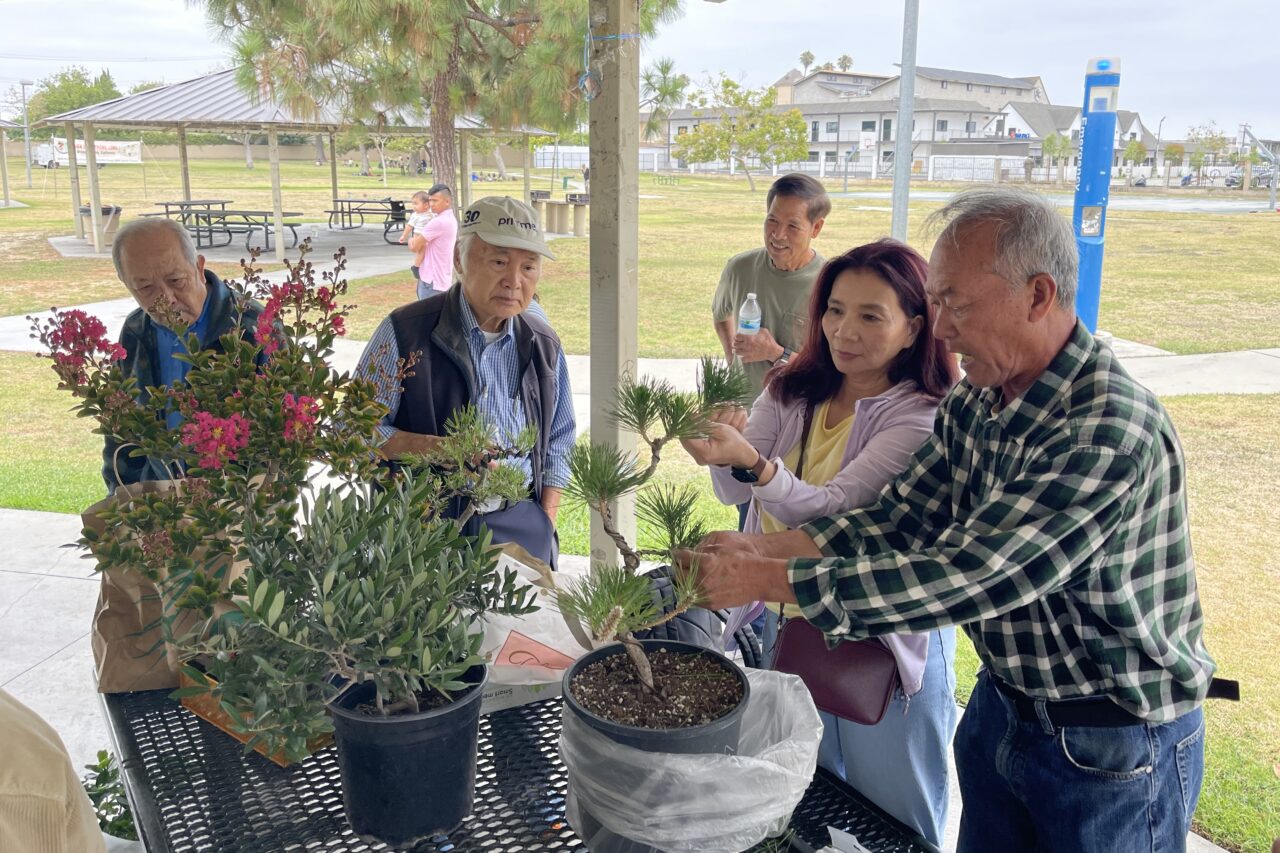
What began as casual gatherings among nature lovers in local parks has grown into the Vietnamese USA Bonsai Society (*), a nonprofit arts organization whose members have transformed their homes into lush green havens. These personal “mini-zoos” and gardens now add countless vibrant patches to Southern California’s urban landscape.
Homegrown “mini-zoos”
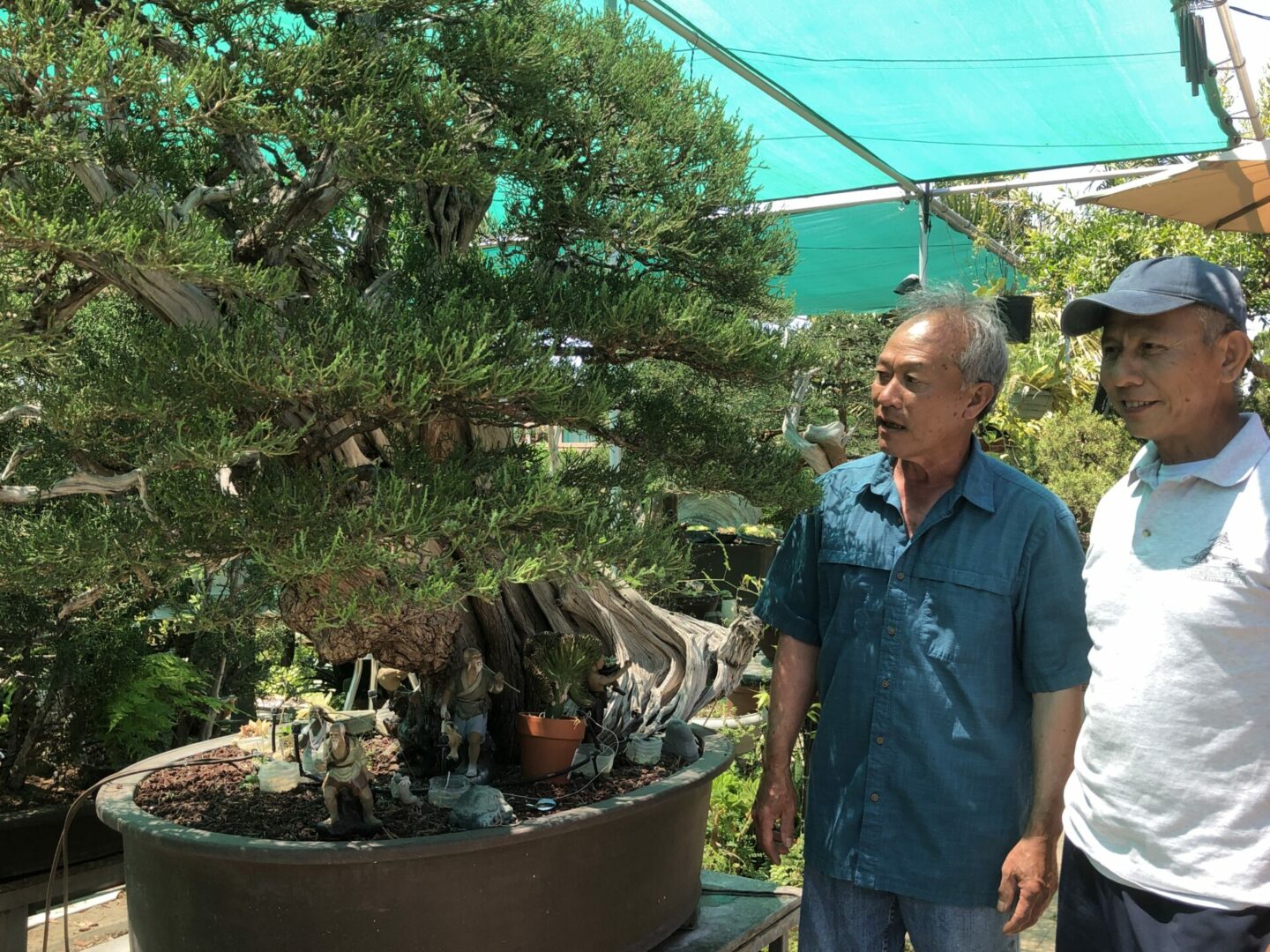
Through the society, I came to know Mr. and Mrs. Vo Quoc – Nguyen Thi Thuan, longtime members who have turned their Garden Grove property into what can only be described as a private “mini-zoo.” Their grounds showcase hundreds of plant species, ornamental trees, fruit trees, water and dry rock gardens as well as fish tanks and aviaries filled with an array of colorful birds.
During my visit, Vo was busy feeding his birds while his wife tended to her orchids inside a greenhouse. Their 1,200-square-foot home sits on a lush 12,000-square-foot garden. The couple stays busy caring for their plants and animals, but the work is a source of joy and fulfillment. Their property overflows with life: California Juniper, succulents, rock formations, orchids, pheasants, peacocks, canaries, parakeets, white-eyes, as well as mango, jackfruit, soursop, tangerine, orange, lemon, pomelo, and ambarella trees.
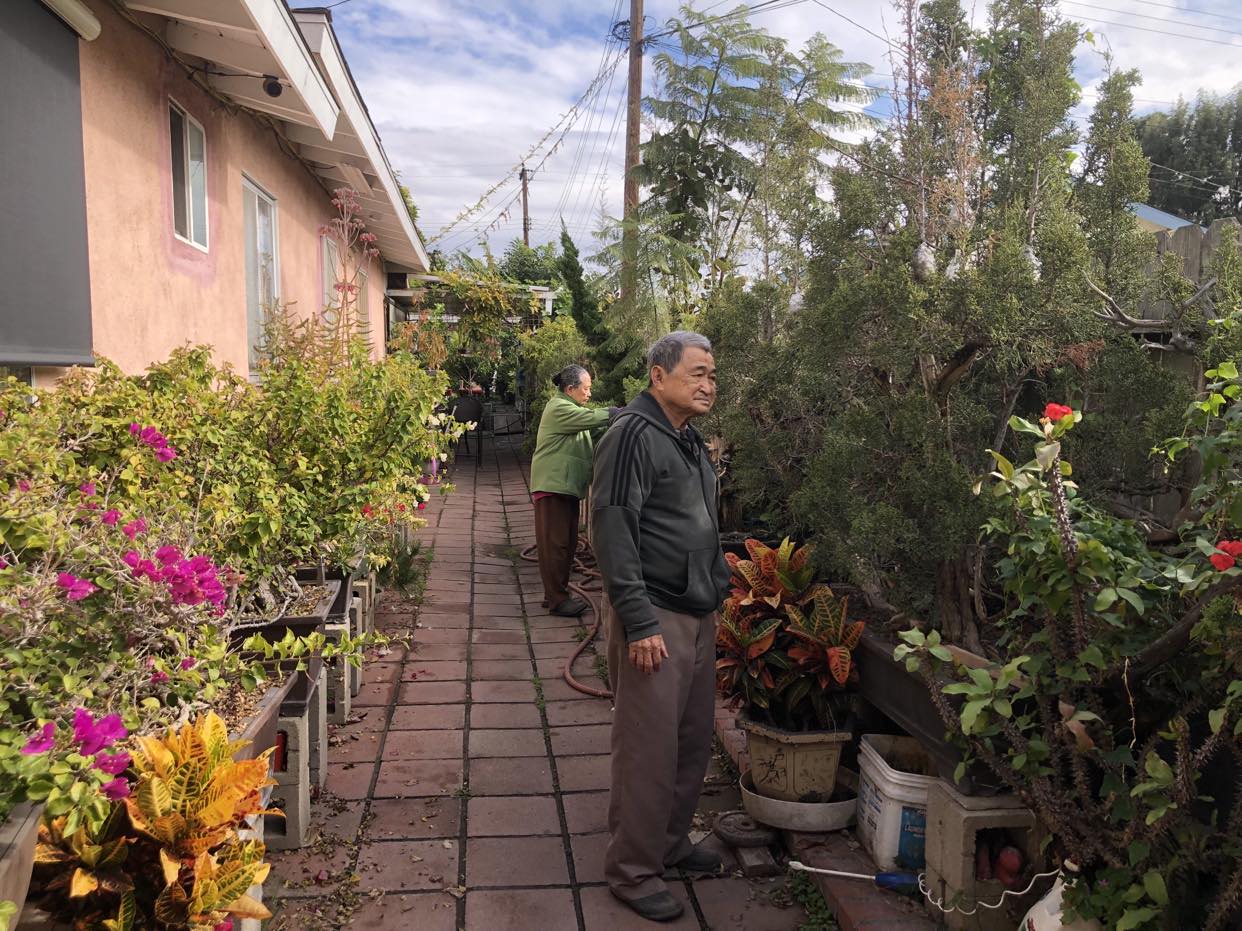
“Years ago, we often walked through local parks, talked to our friends, and learned from other residents,” Vo recalled. “Gradually, I transformed the barren land around our house into the green space as you see now.”
Only a few years after they began gardening, Vo, a former soldiers of the Republic of Vietnam, received Garden Grove’s Home Beautification Award in 2004, signed by Mayor Bruce A. Broadwater, Acting Mayor William Dalton, and council members Mark Rosen, Mark Leyes, and Van Thai Tran on May 10, 2004.
In 2005, after joining the Vietnamese USA Bonsai Society, they became devoted bonsai enthusiasts. Their collection includes century-old trees sourced from states as far as Ohio.
Another prominent figure in the Vietnamese USA Bonsai Society is Dzung Pham – head of technical group. When I visited his home, the backyard was filled with meticulously cared-for ornamental plants.
Pham came from a family rooted in the horticultural profession. His parents worked at both Saigon Zoo and Botanical Gardens before 1975.
“I came to the U.S. in 2010 for the future of my family, but it was sad to leave the profession behind,” he said. “When I first arrived, I lived in Fullerton, then Midway City, then Westminster, and eventually moved to Garden Grove where I’ve stayed until now.”
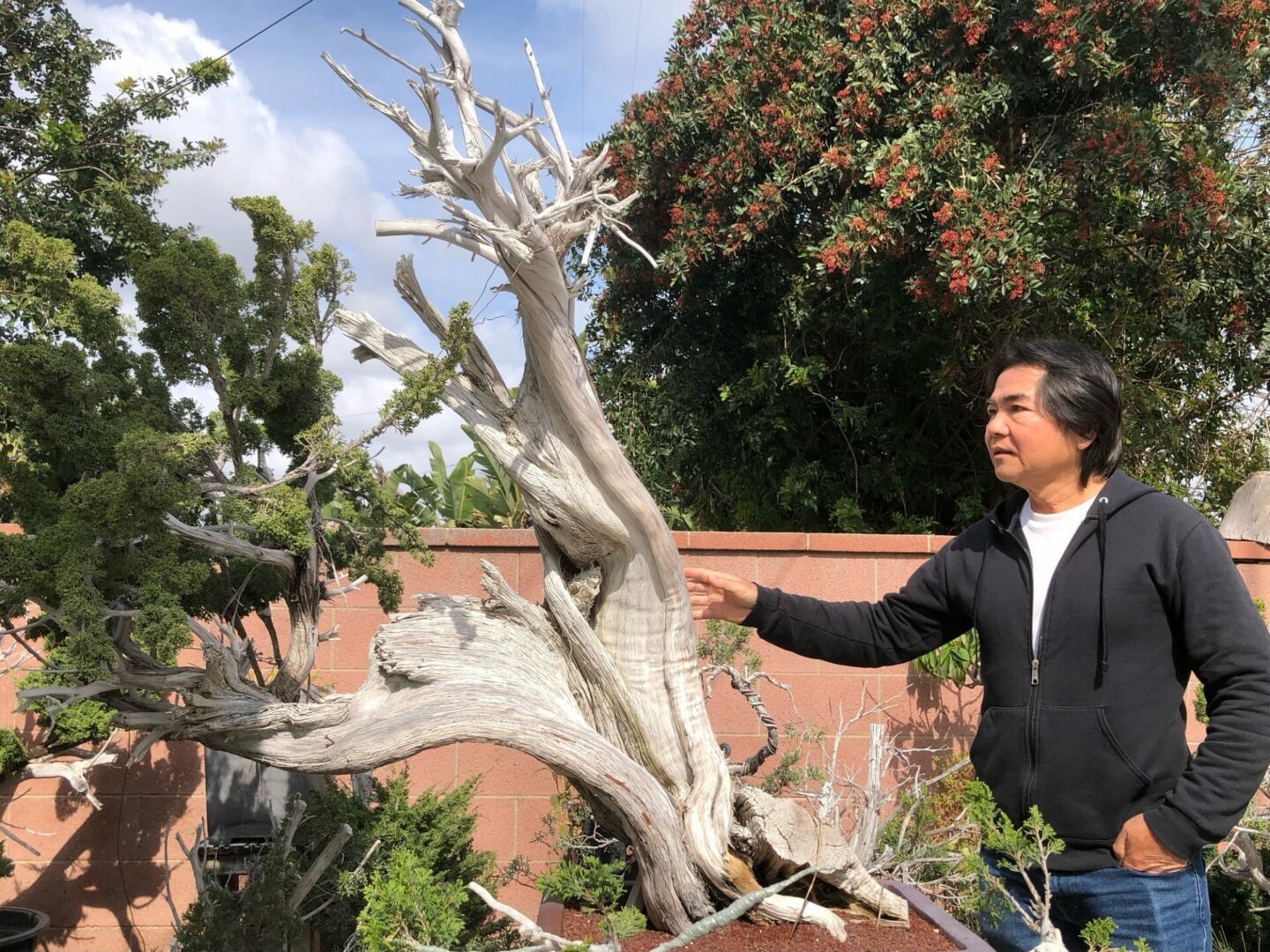
At first, Pham lived in an apartment with no yard, he had to attach wooden planks outside the window to place small pots of plants, just enough to create a hint of green and ease his homesickness. After more than 10 years living in America, he now lives in a more spacious home with a garden.
“I probably have around 50 to 60 large and small trees. They’re not only rare green spaces in an urban environment, but also a true ‘asset.’ Some of my trees are worth over $10,000. Very precious!”
Alongside the Vo’s family, and Dzung Pham, many other members of the Vietnamese USA Bonsai Society also have their own home gardens – the ideas inspired by their gatherings in the park, such as the families of Thong Nguyen in Garden Grove, Ngan Pham in Fountain Valley,…
The parks, where ideas begin
One Sunday morning, I visited Vietnamese USA Bonsai Society’s gathering at Liberty Park in Westminster. Members greeted each other like old friends, their tables covered with bonsai tools, pots, and meticulously shaped trees.
Le Quang Binh, 70, former chairman of this society, recalled: “I came to the U.S. in 1990. In 1998, I visited a Tet Festival bonsai exhibition at Mile Square Park. I was hooked, and joined immediately.”
Le, who first learned bonsai in 1995, bought his very first tree, a tiny Nanajuniper, from a Japanese grower on Beach Boulevard, Westminster City. Later, he studied under Harry Hirao, the legendary “Mr. California Juniper,” who became a mentor and supporter of the society.
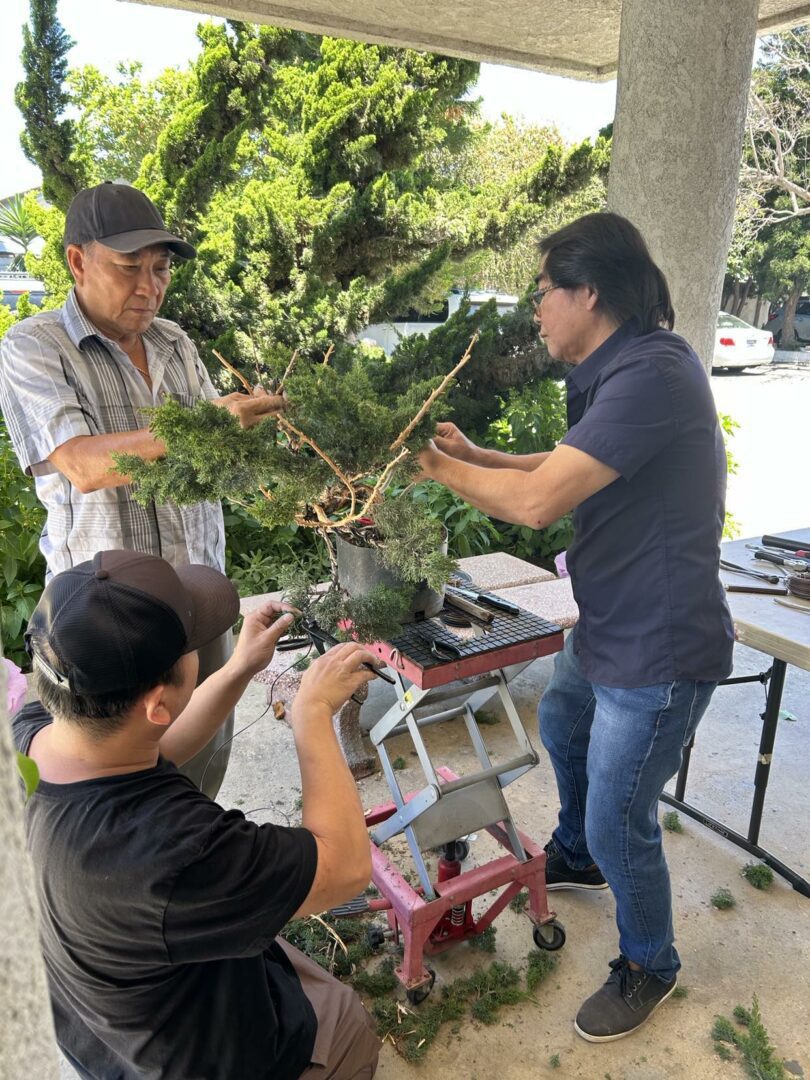
Former two-term chairman Thong Pham added: “There are many bonsai clubs in California, but I love the Vietnamese one. We get to speak Vietnamese, it feels like home.”
At a recent exhibition, I met Tiffany Tran from Santa Ana City. “This is my first time attending,” she said. “I used to live in New York, where mostly high-rises, and green spaces are limited. After my children grew up, I moved to California at the end of 2022 for the nicer weather. Seeing that people here have bonsai sociaty, I love it.”
“Every year, except during the two COVID-19, we’ve organized bonsai exhibitions for Independence Day, Lunar New Year, and other community events,” said Dan Nguyen, the current chairman of the Vietnamese USA Bonsai Society.
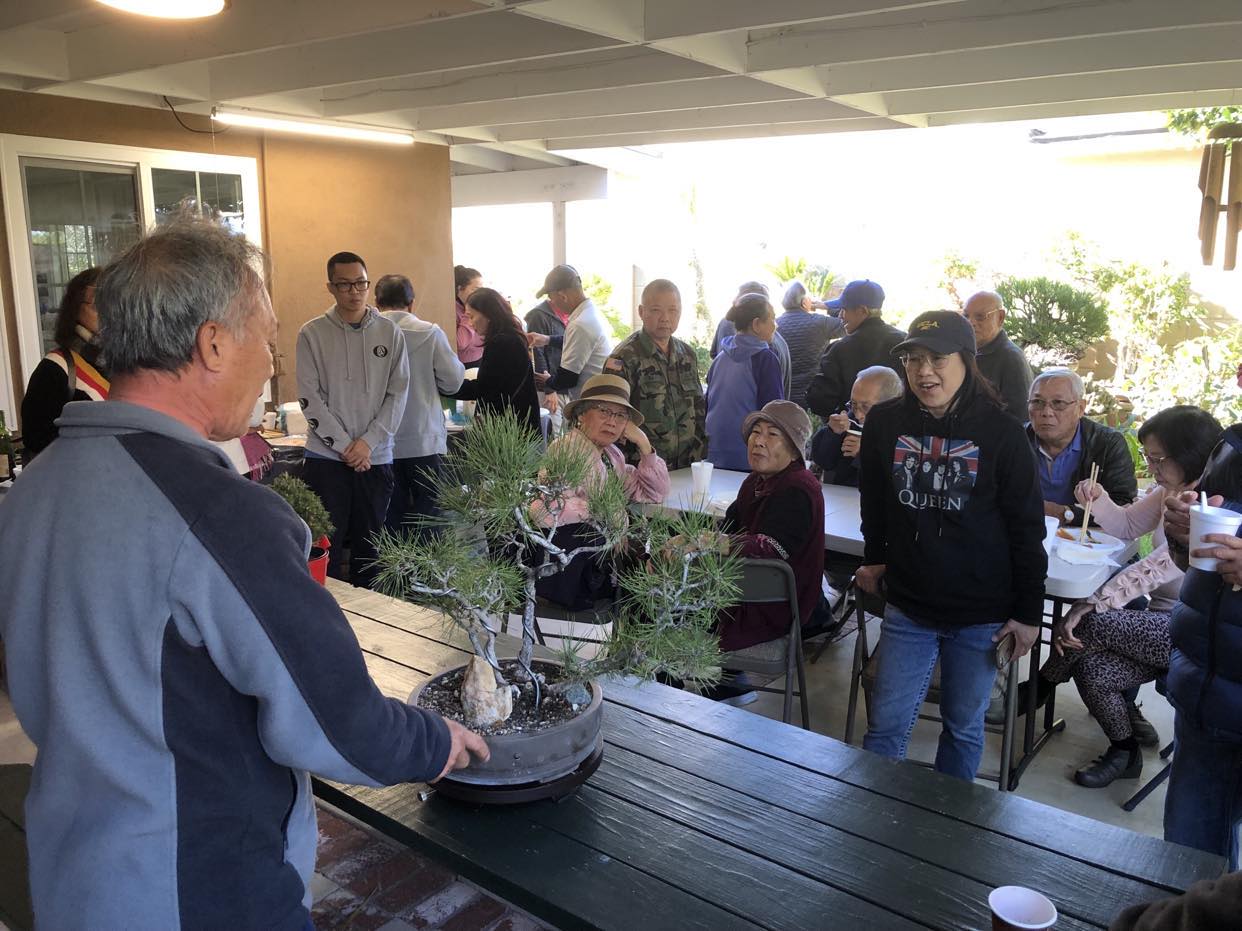
Today, the Society has around 70 active members. They meet monthly at clubhouses in Garden Grove, local parks, or occasionally at members’ homes with large yards.
Beyond regular gatherings, the society hosts at least two exhibitions each year at parks across Orange County, at local temples, or at Asian Garden Mall (Thương Xá Phước Lộc Thọ).
Through these events, Nguyen often sees newcomers eager but inexperienced.
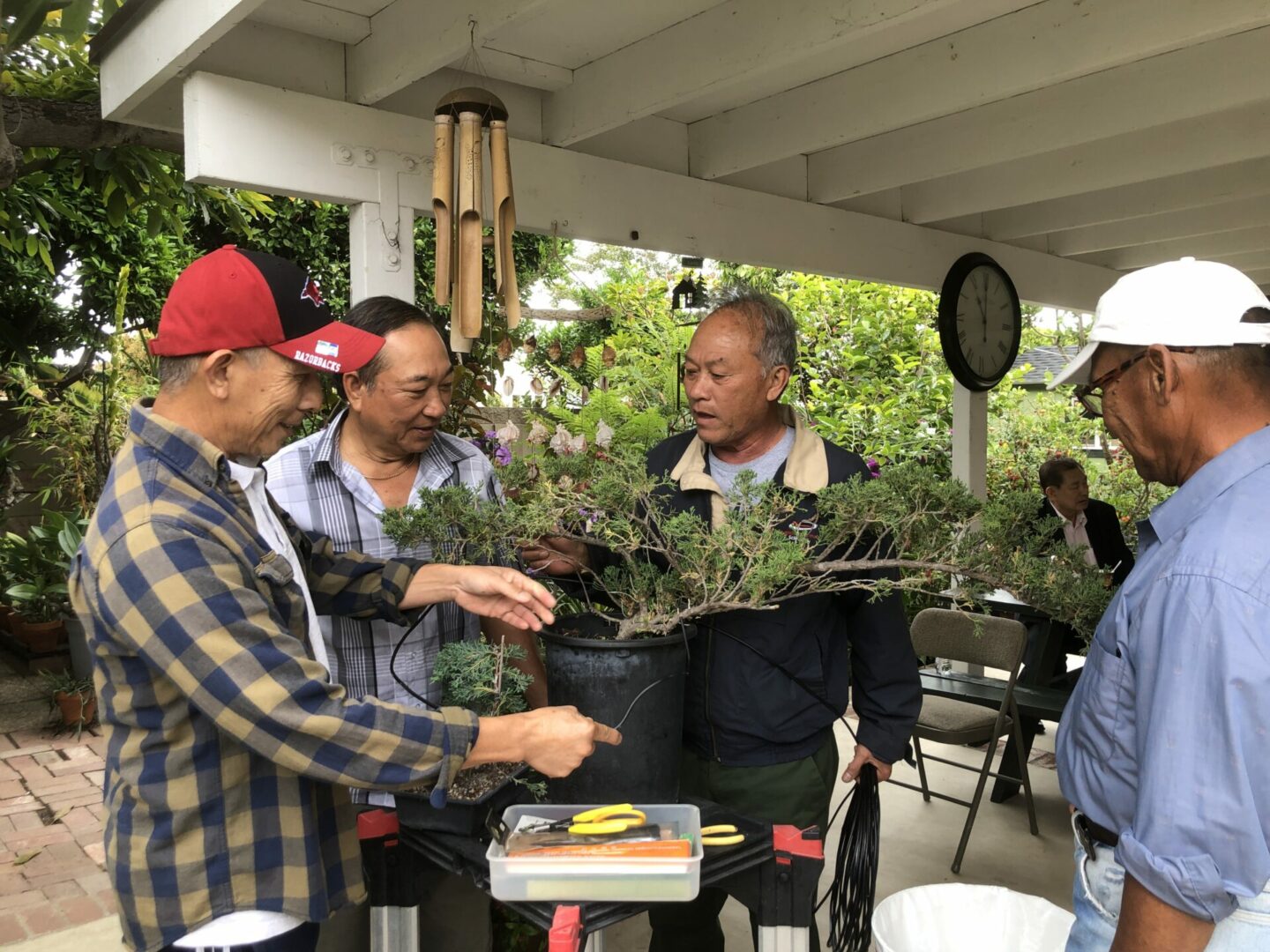
“They love bonsai but don’t know where to start. So every meeting, we teach techniques, grafting, pruning, and shaping. It’s how beginners start their journey.”
Members bring their own trees to meetings, where the group discusses the appropriate style, aesthetic direction, and pruning strategy. Then, members continue the work at home or alongside technical team.
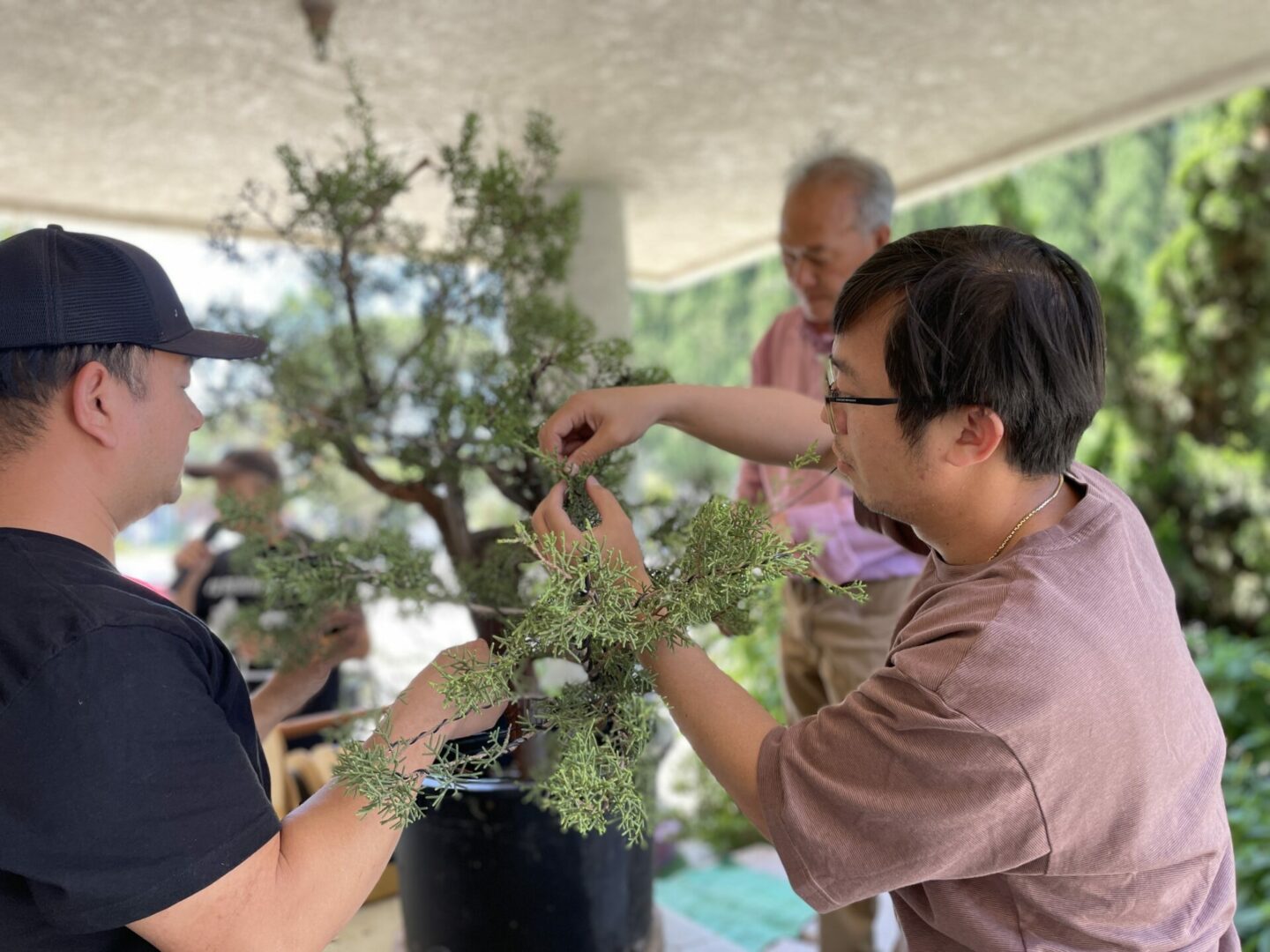
Vietnamese USA Bonsai Society attracts not only older hobbyists but also younger enthusiasts like Vuong Chinh, Nathan Nguyen, and some others. “After a long day at work, I visit my little ‘tree friends’ in the backyard to relax,” Nathan Nguyen said. “Parks are wonderful, but having a green corner at home, that’s something special.”
(*) The Vietnamese USA Bonsai Society is a nonprofit organization dedicated to bonsai and ornamental horticulture. It promotes culture and the arts in a democratic spirit, independent of any political or religious influence.
***
This story was produced by American Community Media in collaboration with the Laboratory for Environmental Narrative Strategies (LENS) at UCLA as part of the Greening American Cities initiative supported by the Bezos Earth Fund.